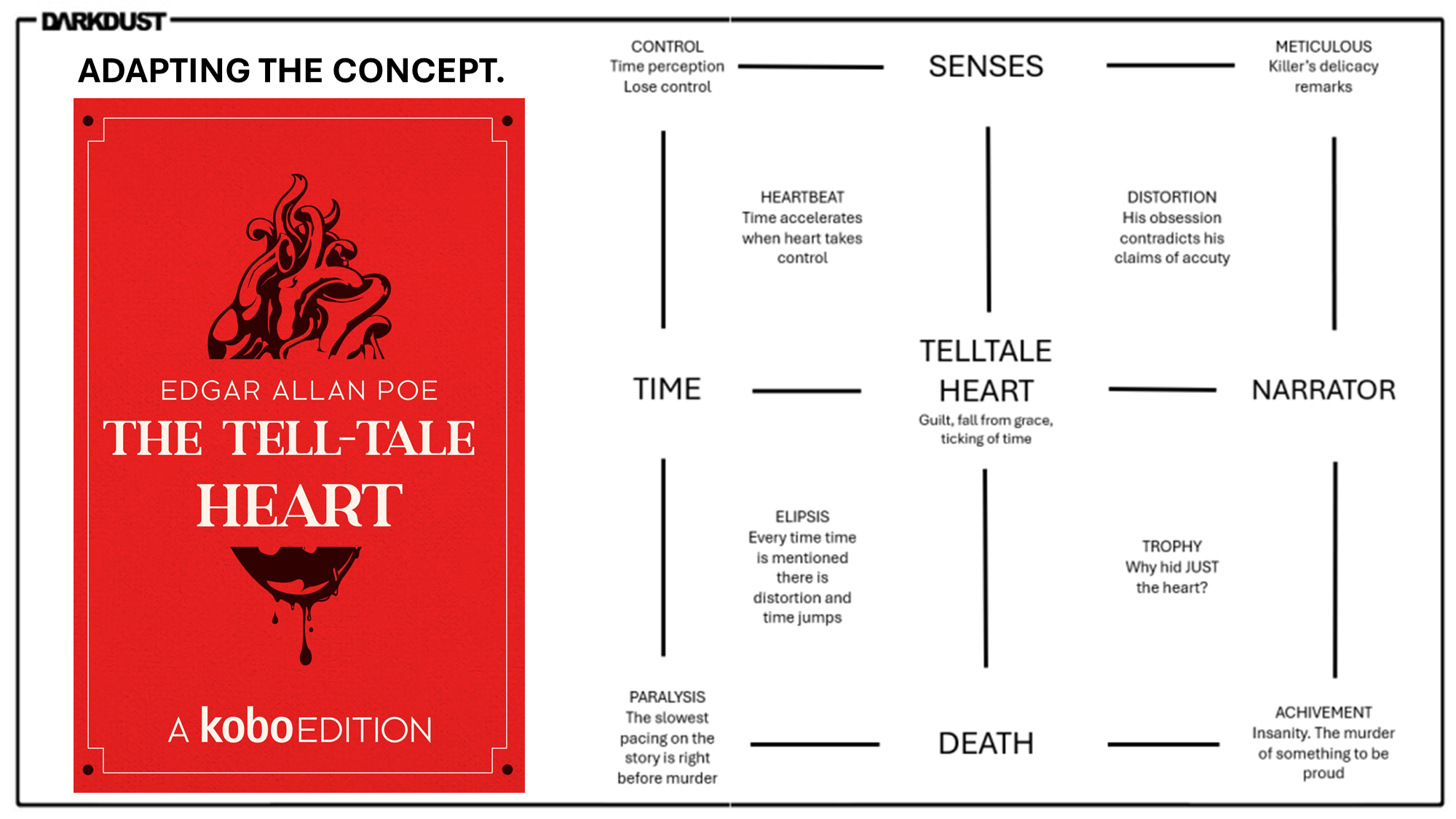
After this I stablished a concise summary and the core driving device:
Core narrative driving device: A young madman trying to convince the audience he is not.
Themes: Insanity, guilt, paranoia.
Narrative Rundown:In his murder confession, a young madman relates how he planned his crime over a week, trying to convince us that he is not insane. Right after he killed the old man, the police—alerted by a noise complaint from the neighbor, arrives at the house. The killer, driven by guilt, shows the heart of the victim hidden on the floor to the police.
Design Directives
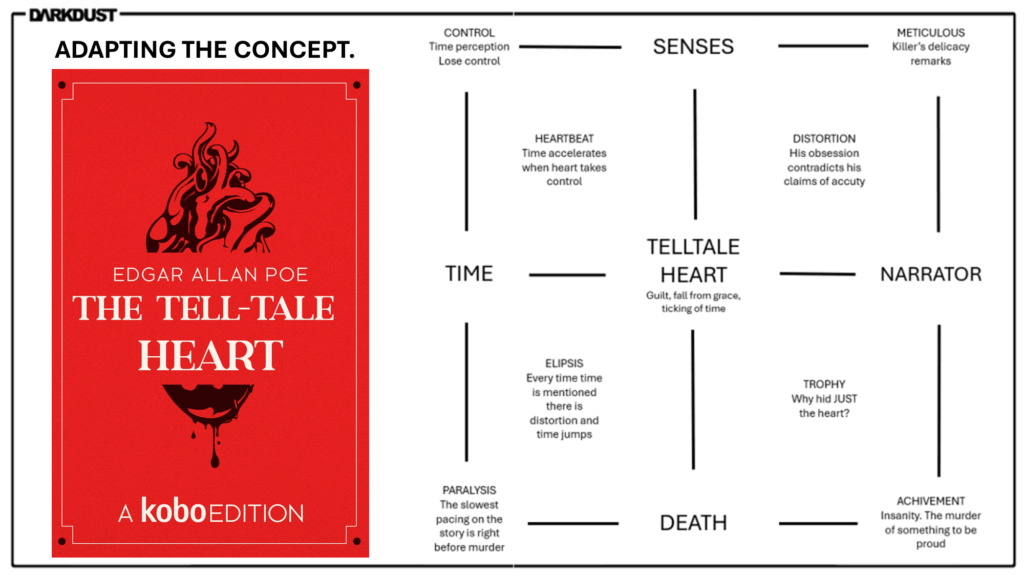
Step 1:Identify the short story into its narrative pillars.
The key points are as followed:
Time:sensation of meticulous obsessiveness spiraling into decay of the young man’s facade of sanity.
Narrator:The monologue, a confession of murder to the audience.
Death:A recurring theme on Poe’s literature, and the pivotal beat of the story.
Senses:remarks and symbolism of human senses.
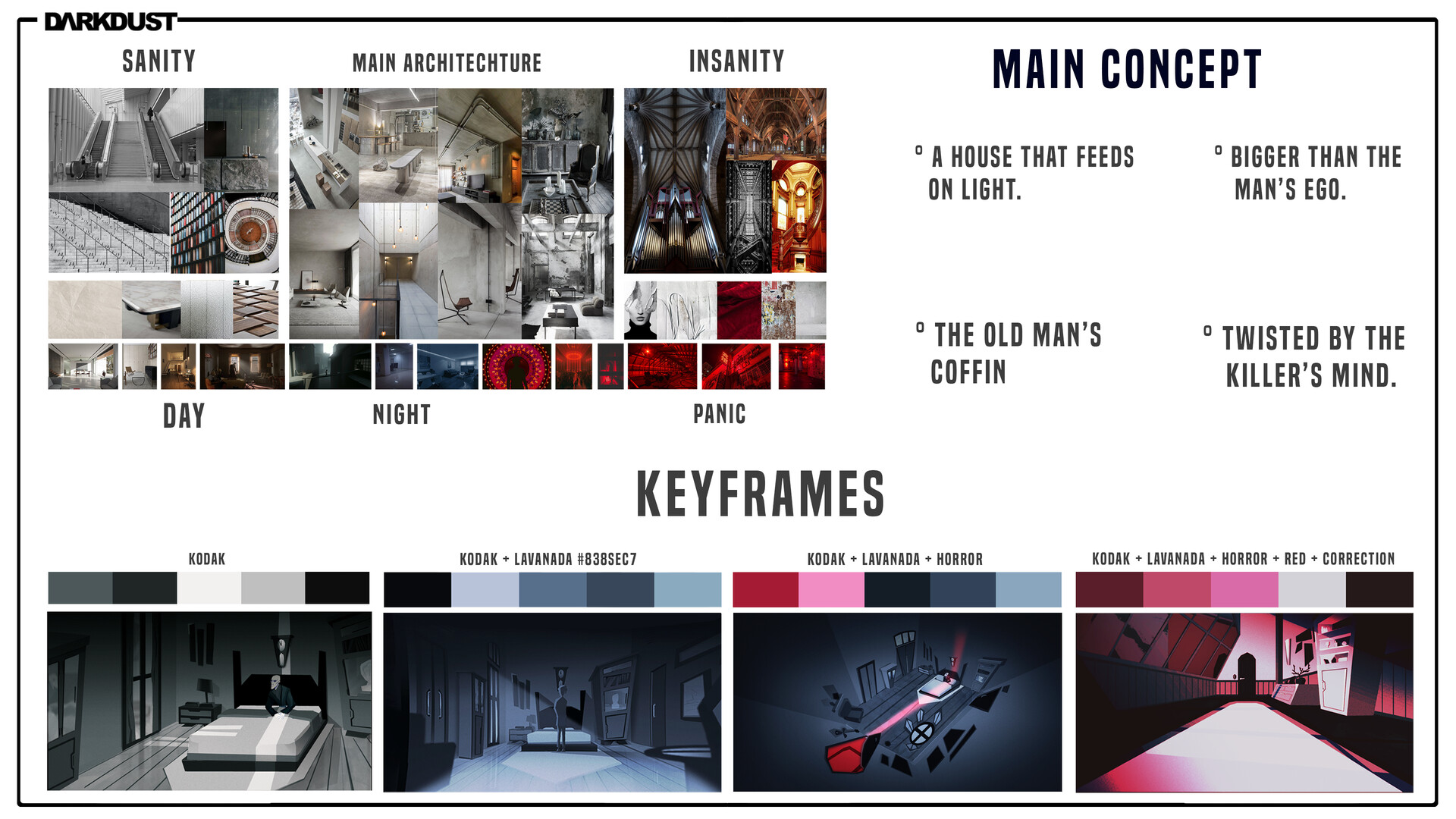
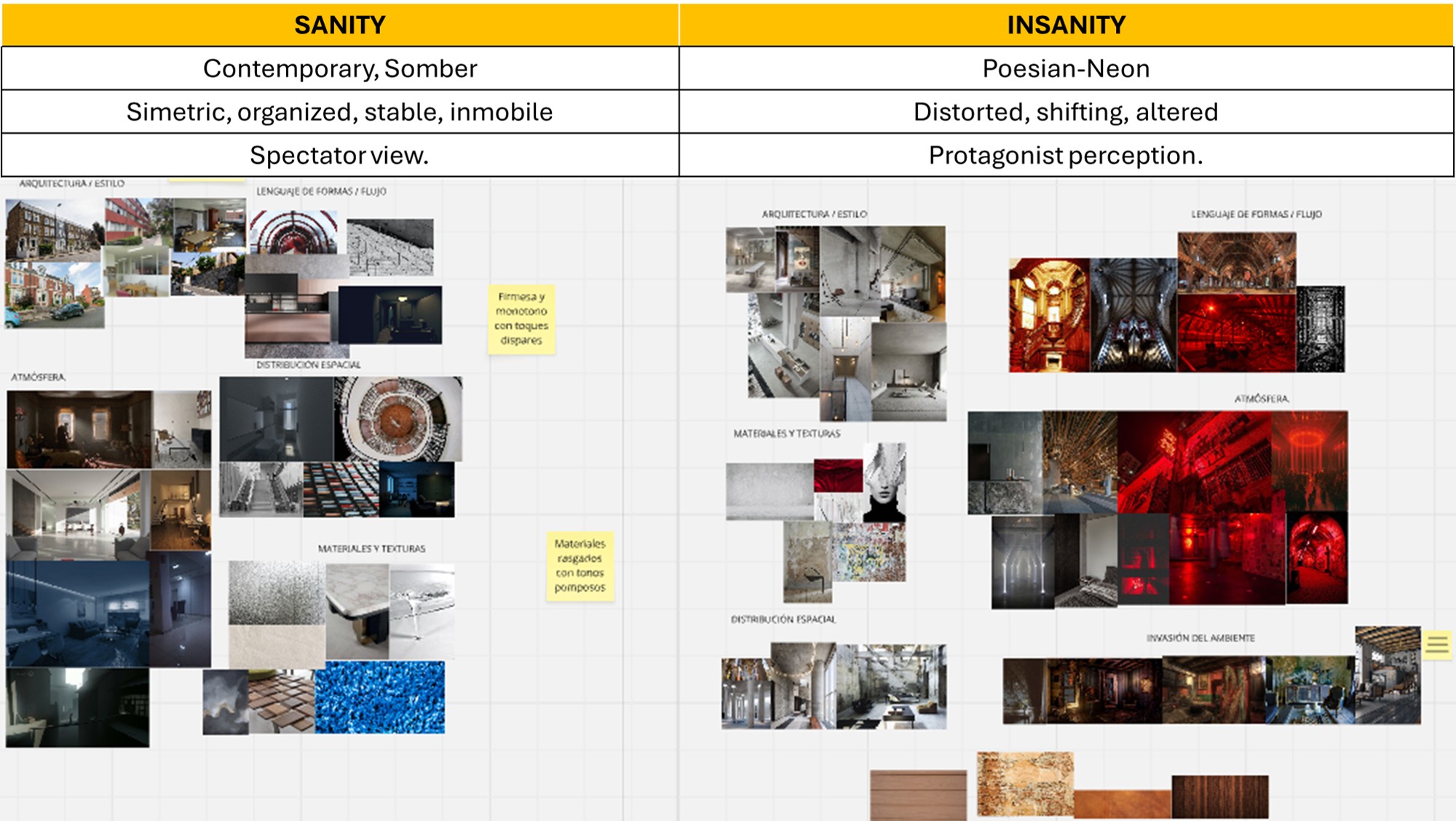
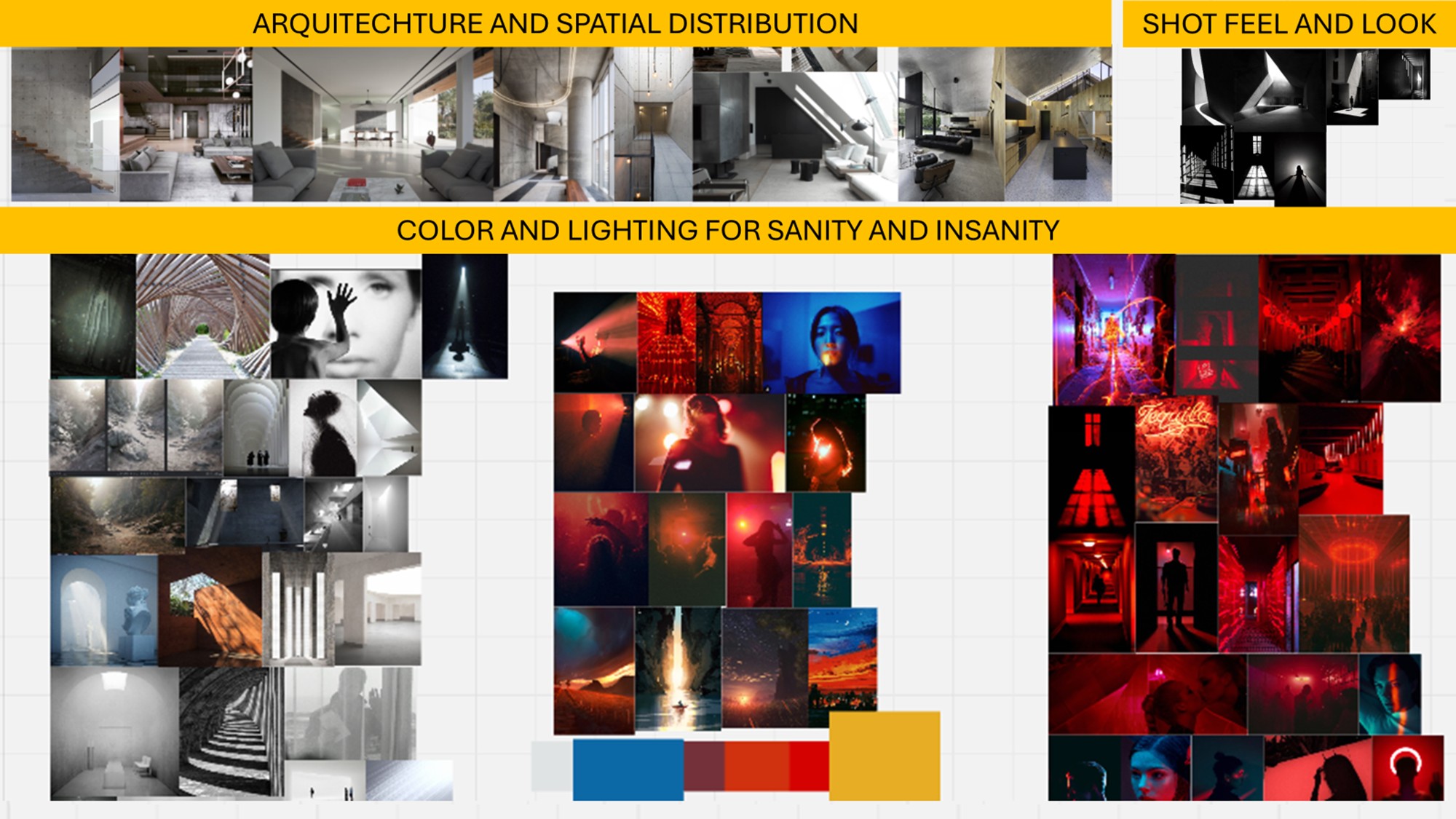
Step 2:Connect this themes to the environment and lighting, through explorations and moodboarding.
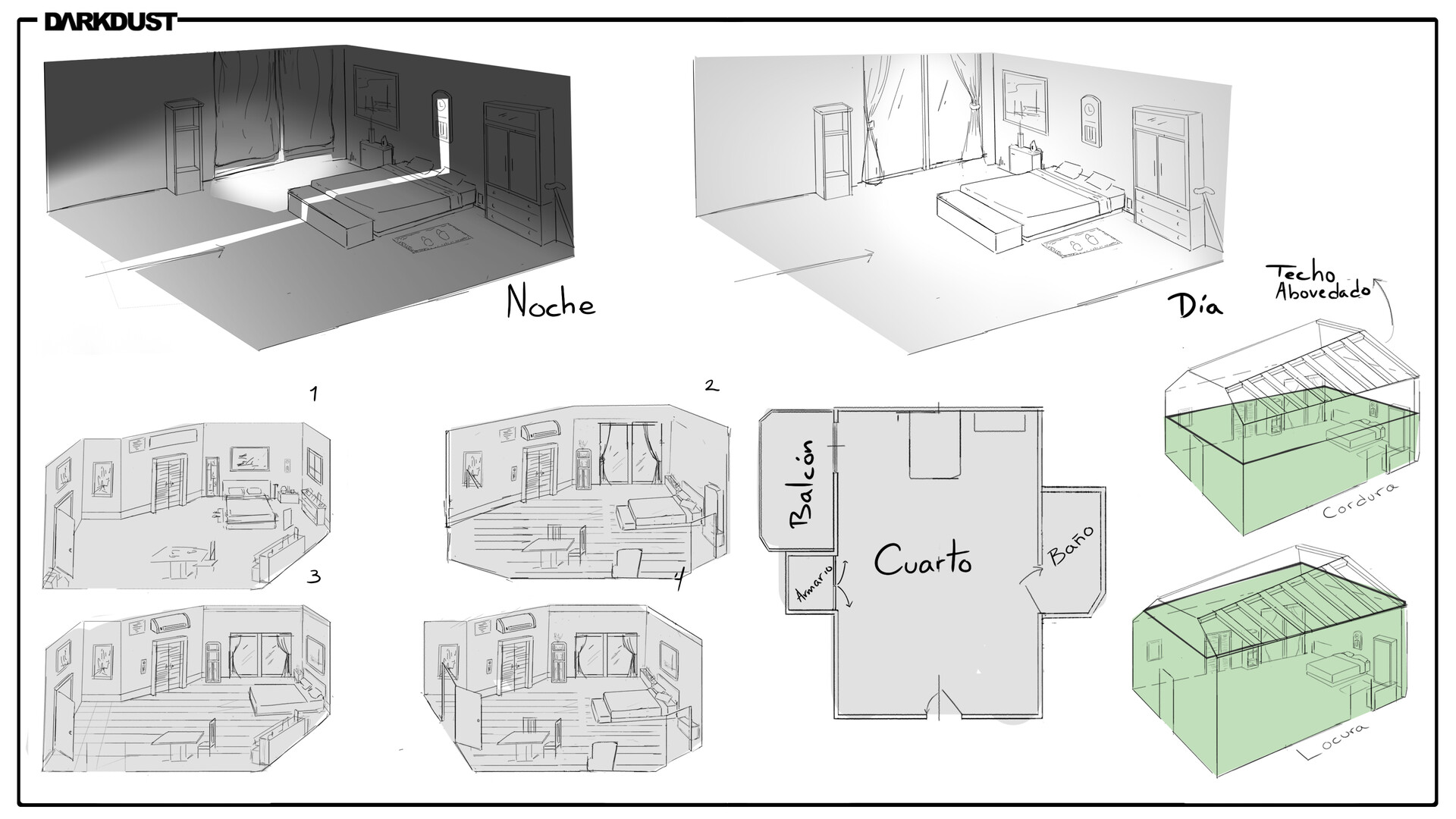
Duality in lighting:The sanity and sanity of the main character would use the same space, cutting costs.
Distorted Structure:Created an empty space, crowded with erratic patterns, overloading the senses.
Design Directives
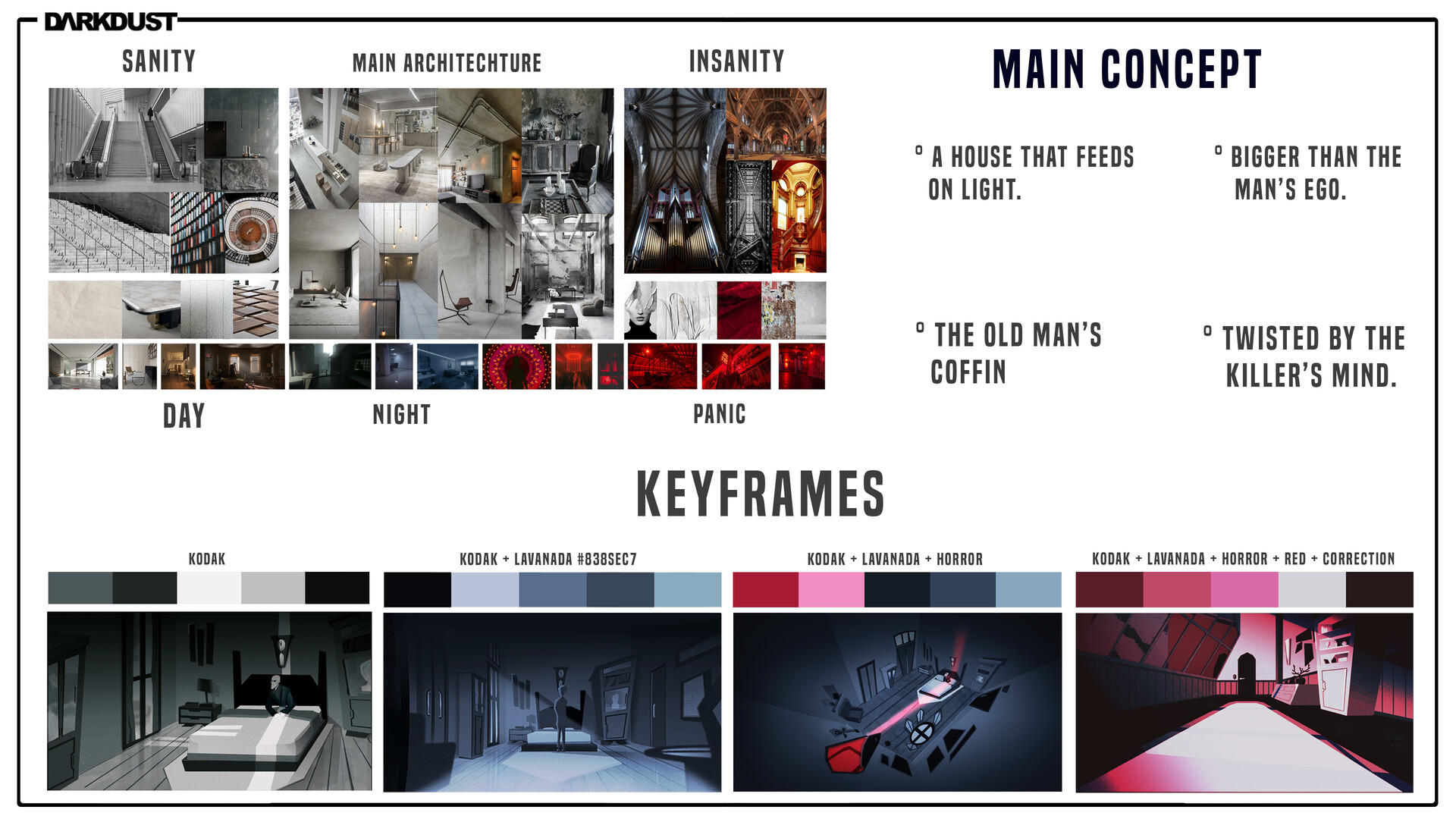
Moodboards
Early Explorations
Visual-Narrative Integration
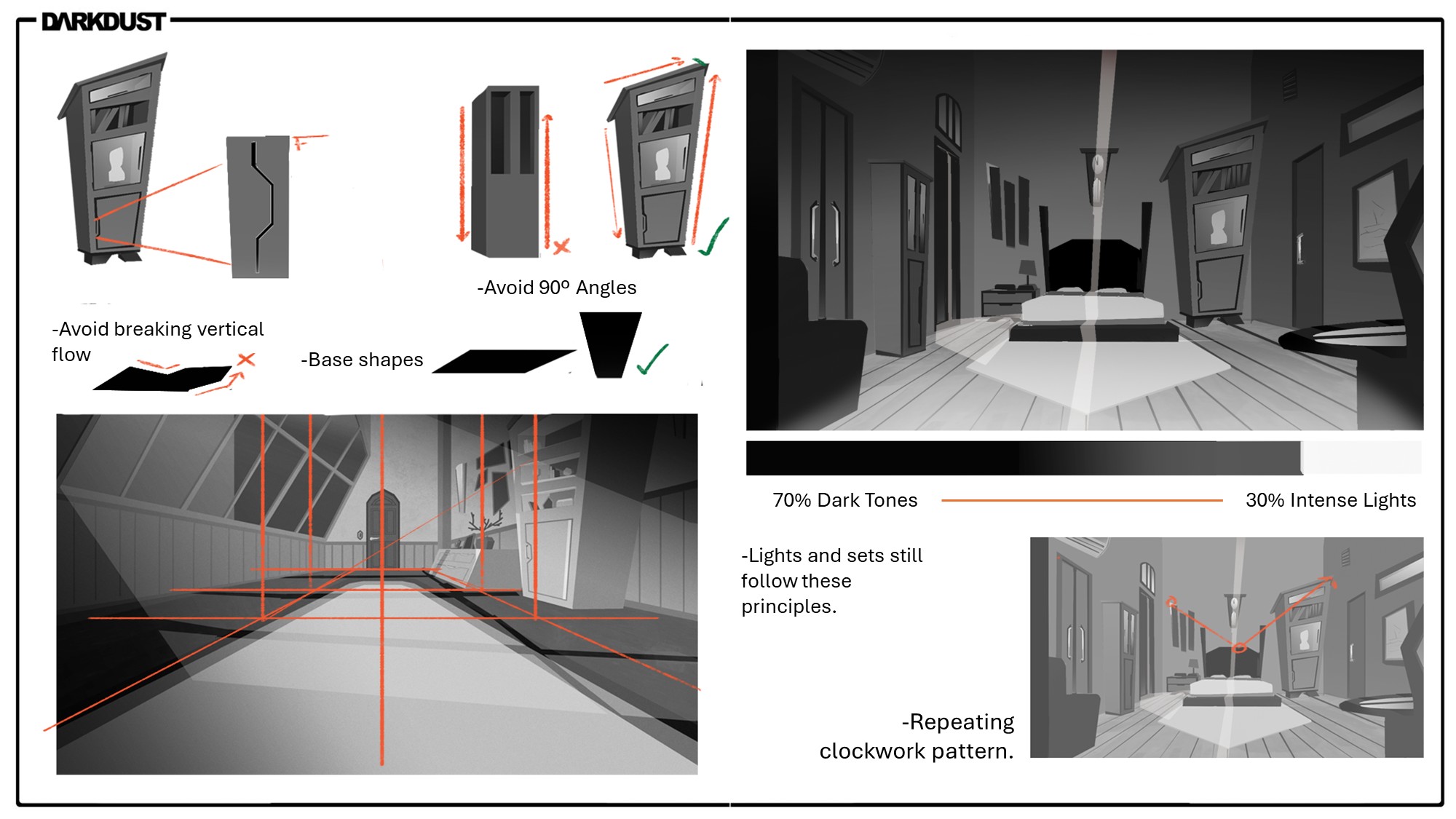
Using the directives established I developed a style for the interiors.
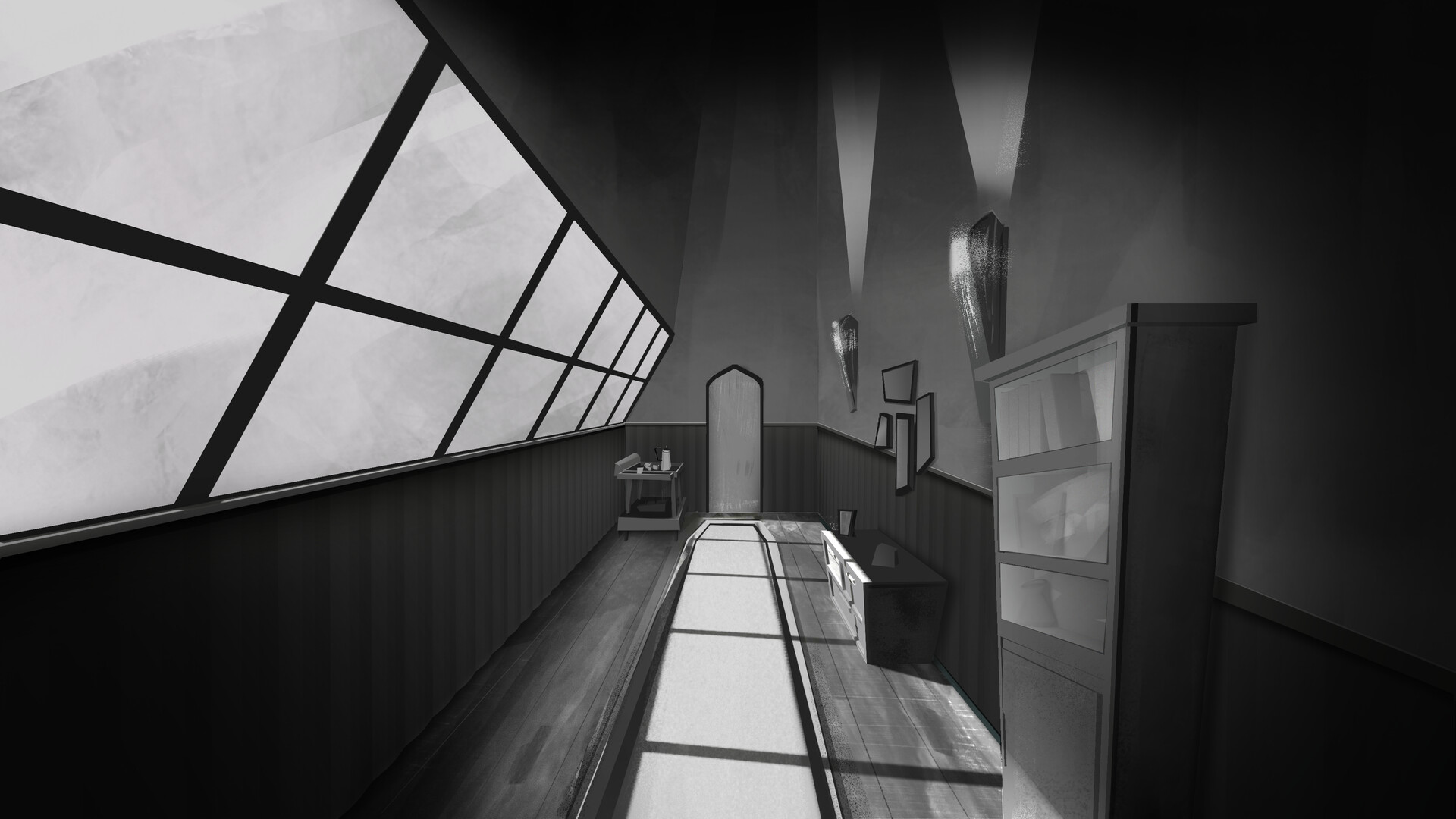
Visual Rhythm: Using the Tomb and clock as motiff, the shapes were tall with strong directional sense.
Assymetric Design: Breaking equilibrium to make the environment feel opressive.
Use of Contrast: Darkness and gloom even in daylight. With light being intense.
I integrated the guidelines and style developed into keyframes.
Environmental Storytelling:Each space had clear correlation with the guidelines.
Ligthing as narration:The lighting in each space followed the killer state of mind
Keyframe generation: The Keyframes helped the creation of the color storyboard.
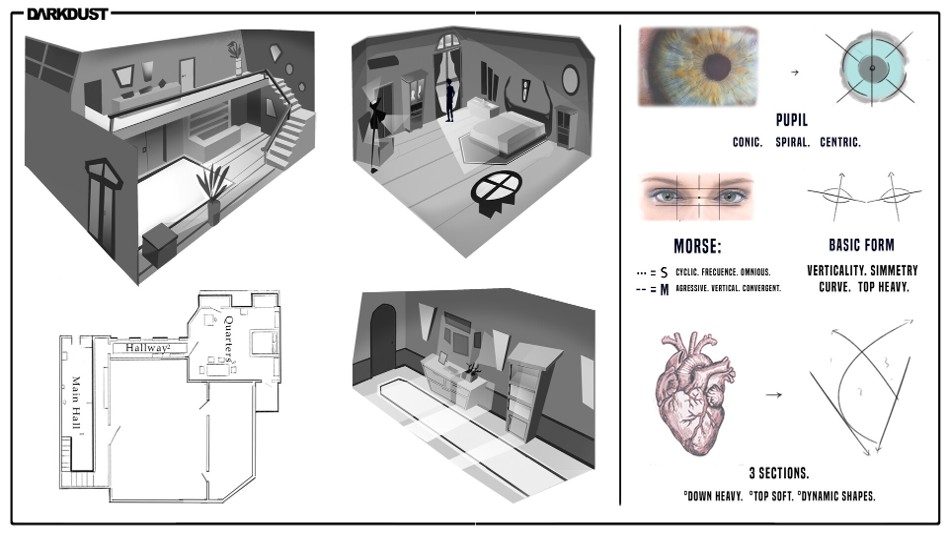
The house rooms were designed using the same principles.
Translated to design and abstract patterns:
Clock mechanism: Arhythmic flow of prop dressing.
Gaze as guide: The lines naturally found in the human eye.
The Heart: The flow of blood and muscle through the form of a heart.
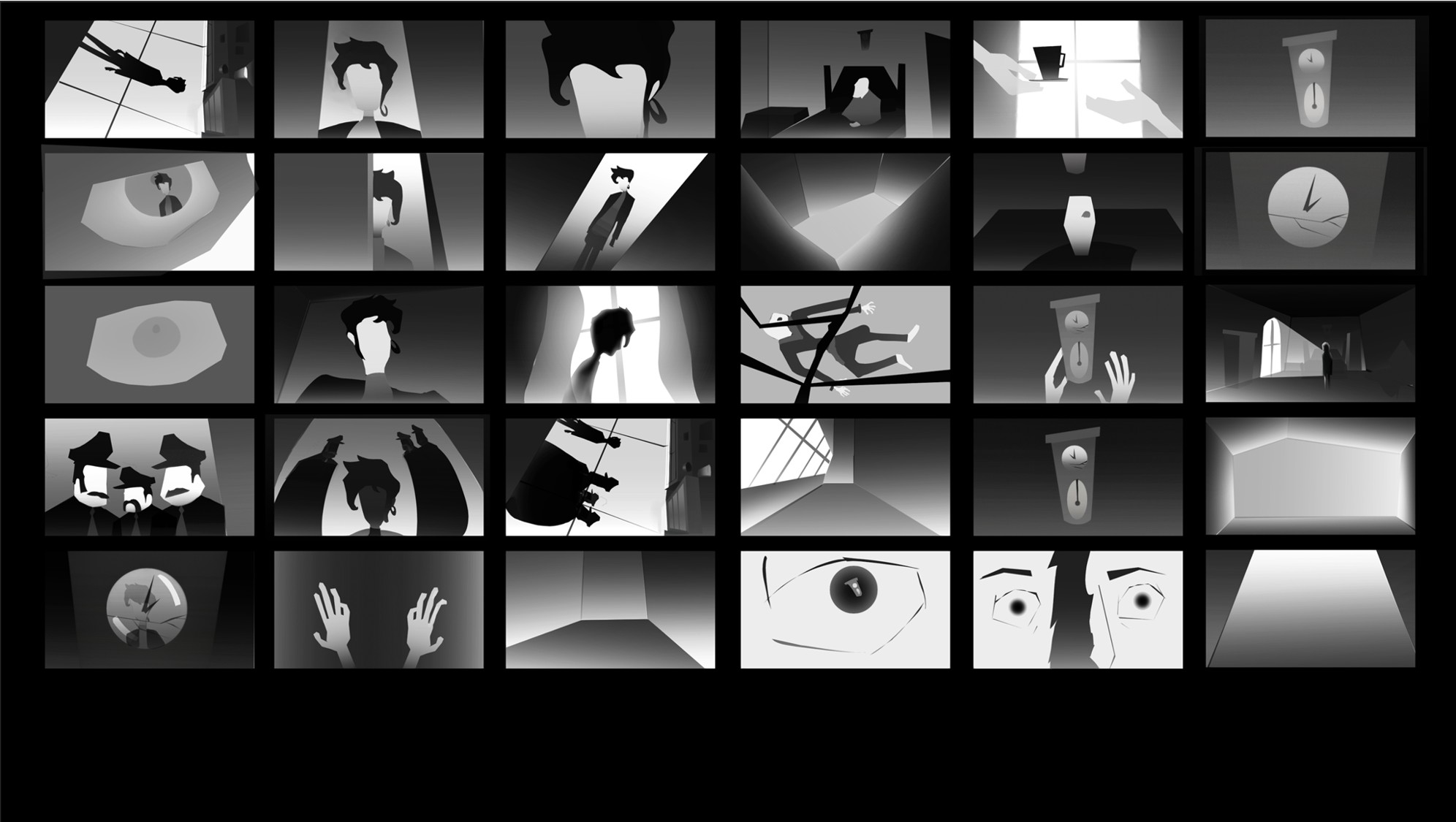
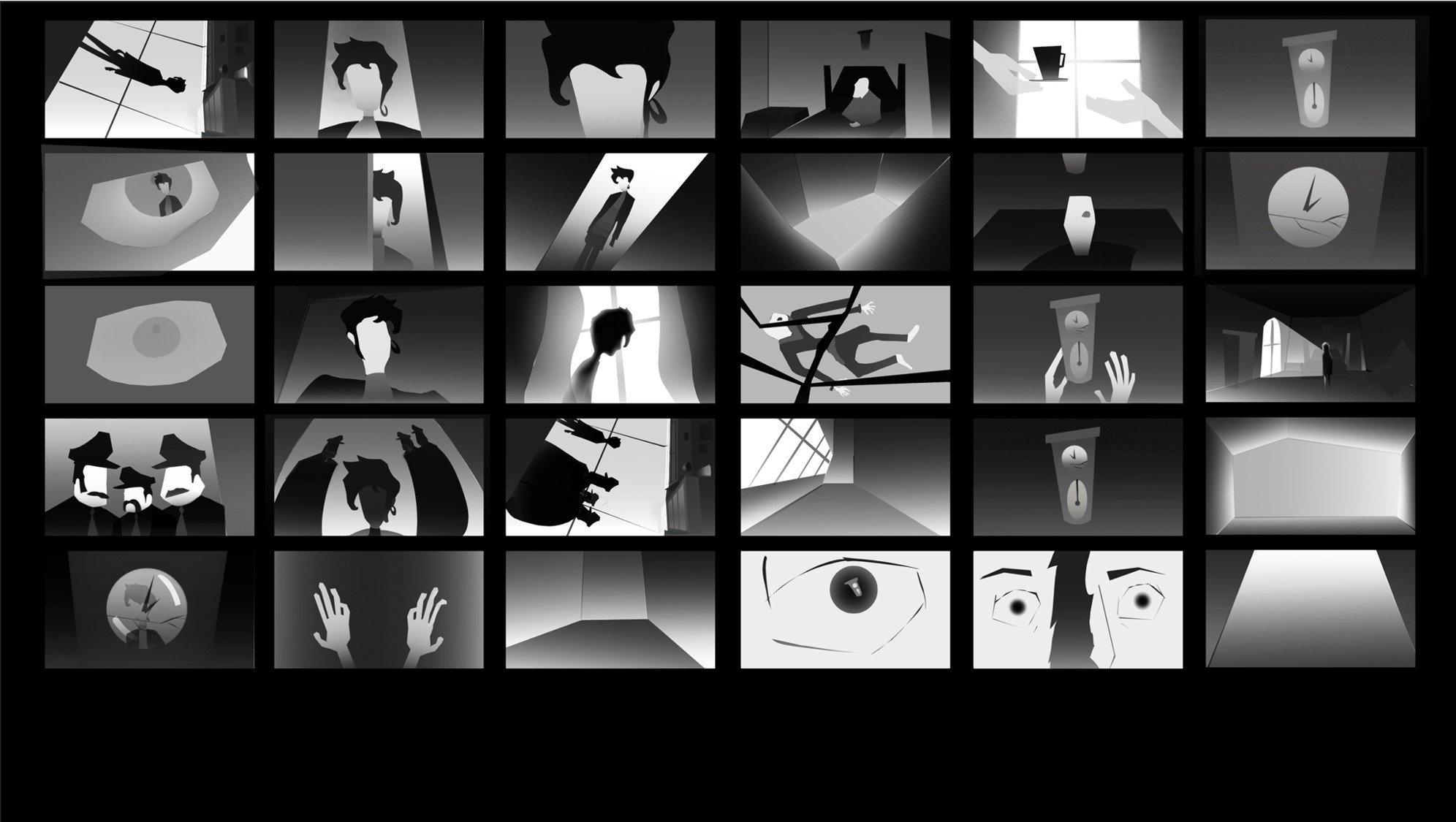
Storyboard Breakdown.
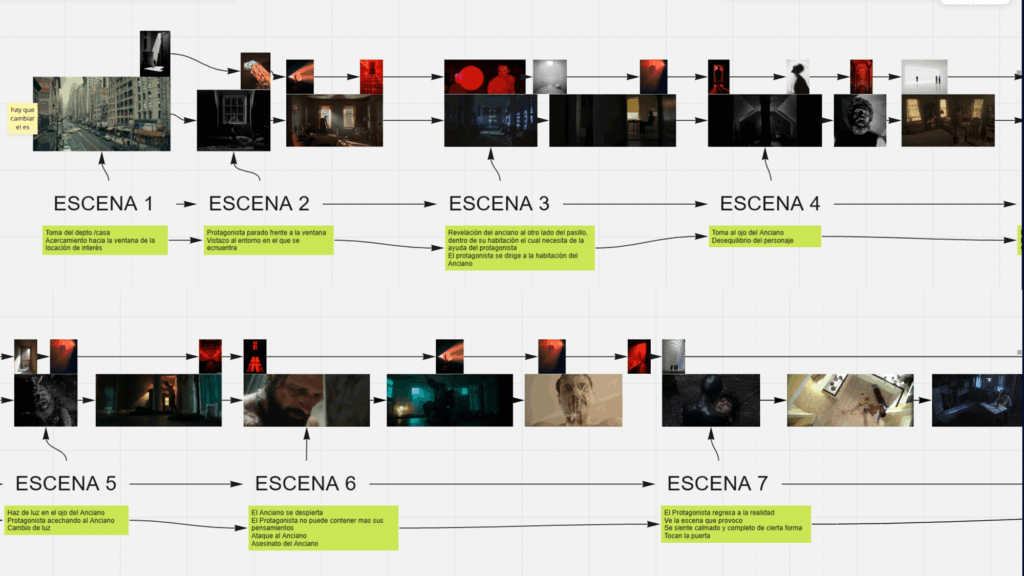
Early Story Beats Storyboard
I created a rough draft for previsualization.
I used the moodboard images to make the story beats fit onto the team vision.
Early Proof:Quickly design and iterate without creating assts.
Team Collaboration:Notes and changes could be suggested real time.
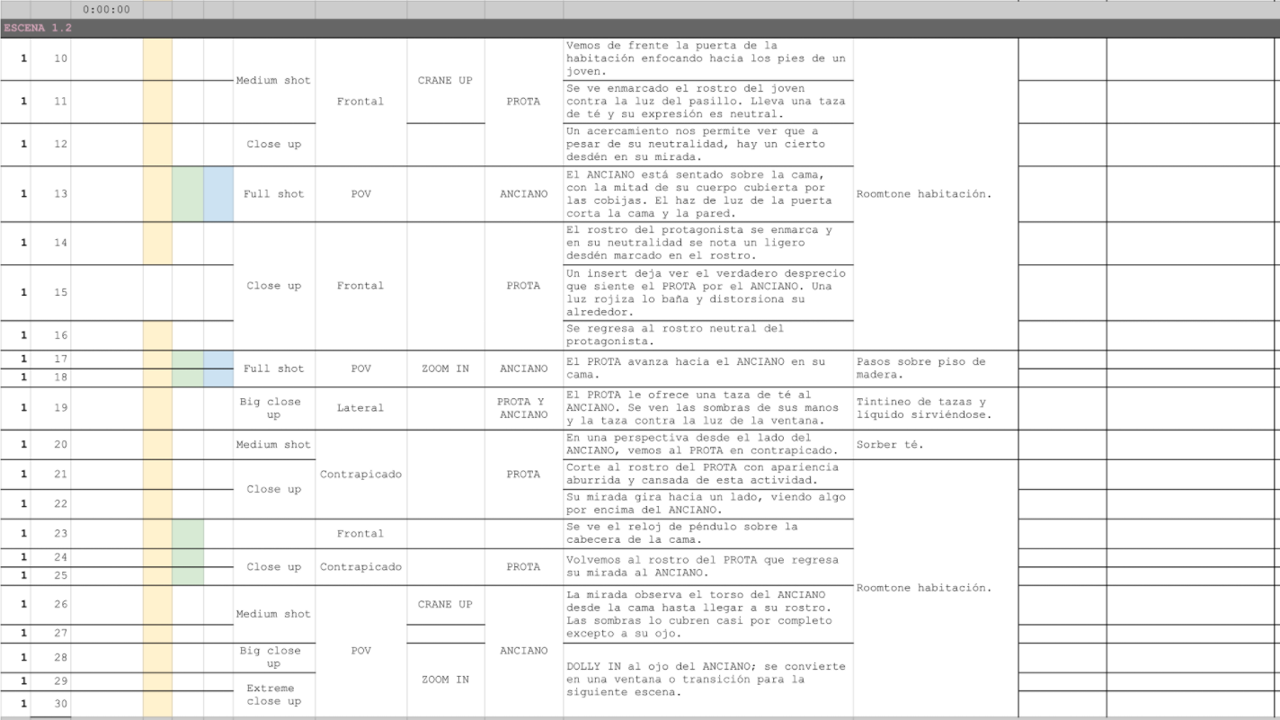
Storyboard Shooting List
I Created a Shooting List Breakdown for production.
This was based on the storyboard the team created on the end stages of pre pre-production.
Production Ready:Used as a board for team collaboration on various departments.
Shot Description:Wrote all shot descriptions and actions within the spreadsheet.
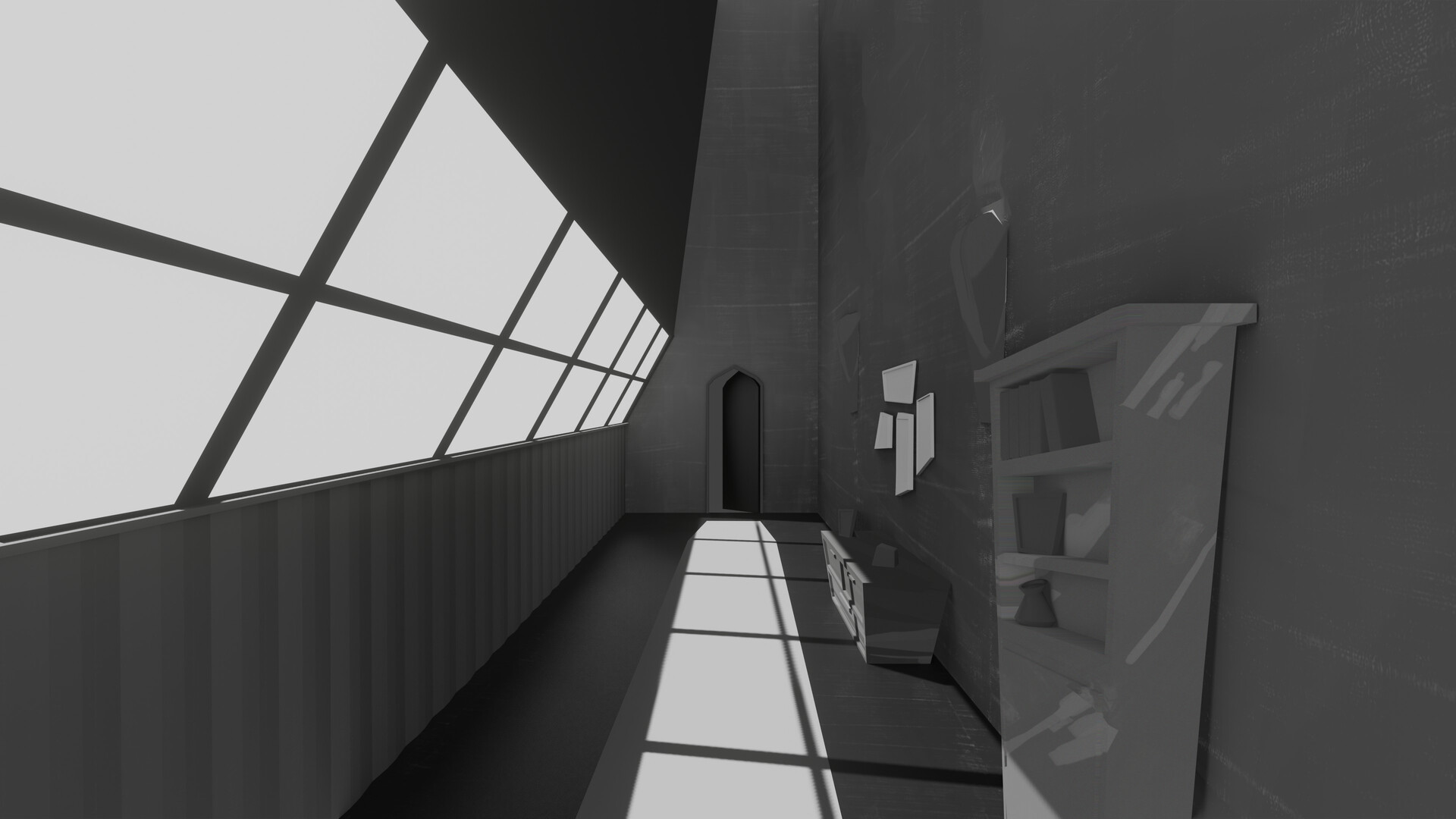
Environment Production
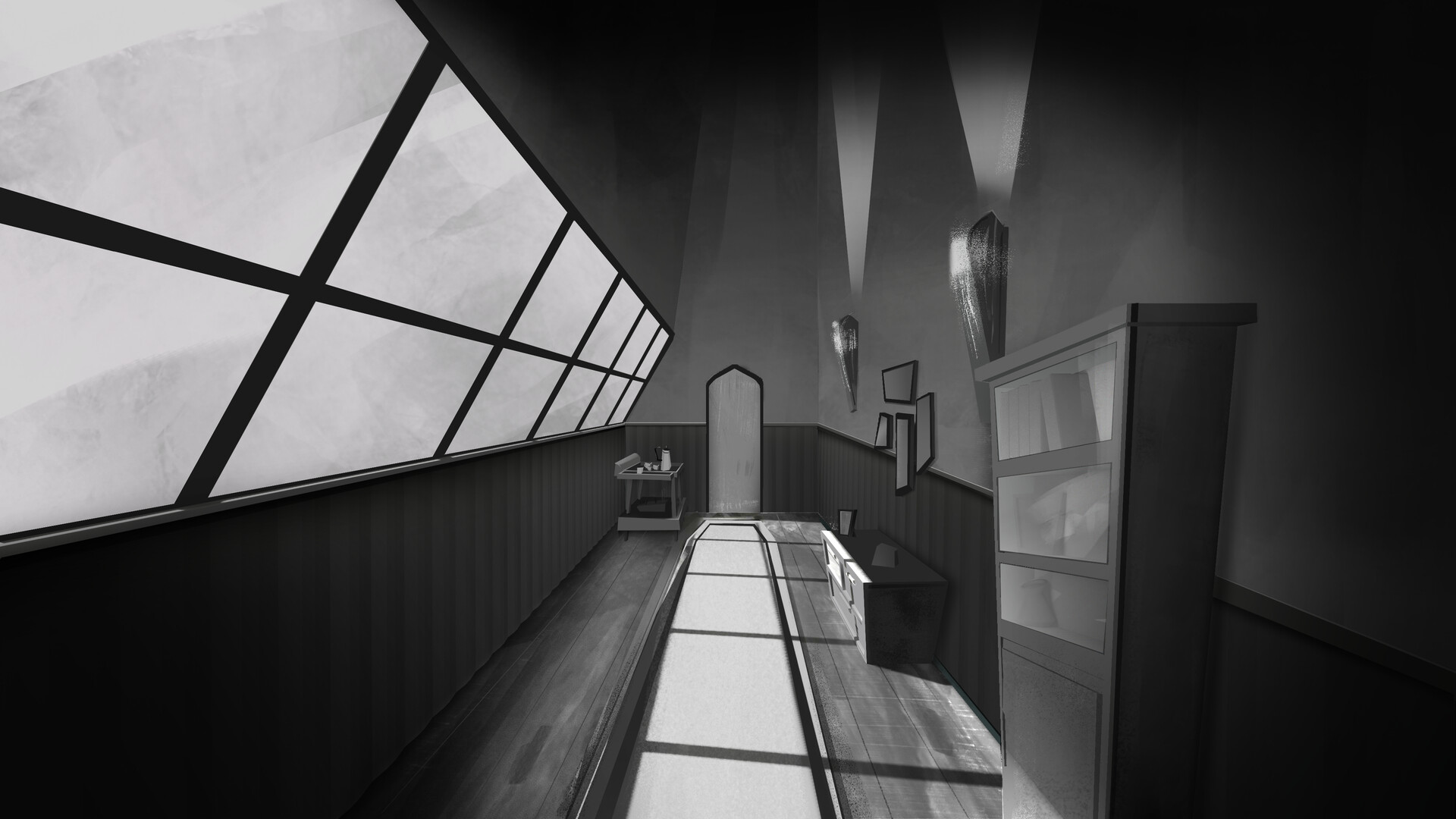
I painted and supervised the production of the Backgrounds.
I worked on all steps of the pipeline from concept to production of the project.
Blend of Technique: Created 3D blockouts, to aid paint 40+ background pieces.
Indie in Nature:An unique opportunity to work on the narrative and directly realizing the vision as a background artist.
THANKS FOR CHECKING OUT THE PROJECT!
“Tear up the planks!—here, here!—it is the beating of his hideous heart!”